Hey everyone, it’s [Your Name] here from [Your Company Name], your go-to bike frame supplier who’s been geeking out over titanium builds for almost a decade. I get it—every time someone mentions a titanium bike frame, I see that same puzzled look cross their face: “Man, those things cost a fortune. Are they actually worth the cash?” Let’s cut through the marketing fluff and break this down like I would with a customer who’s standing in my warehouse, running their hands over a raw titanium tubeset. No fancy jargon, no overpromises—just real talk from someone who spends every day building and shipping these bad boys. Bike Frame
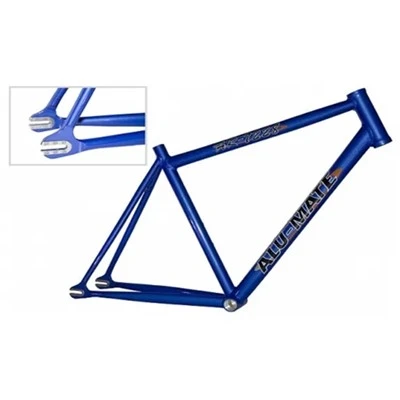
First off, let’s get one thing straight: I’ve worked with steel, aluminum, carbon, and even a few funky experimental materials over the years. Titanium isn’t just another “nice to have” material—it’s the only one that checks almost every box for serious riders, whether you’re a road racer grinding out century rides, a gravel fiend tackling remote backroads, or a commuter who bikes in rain, snow, and whatever else the city throws at you. But let’s start with the big question: why does it cost so much? Because titanium isn’t like grabbing a roll of aluminum tubing from your local metals supply shop. The raw material is titanium alloy (we use 3AL-2.5V, the workhorse for bike frames, not that super expensive aerospace grade that costs a small fortune for a tiny piece). That stuff has to be mined, purified, and formed into tubes with precision that’s way stricter than aluminum or steel. TIG-welding titanium? It’s a delicate dance—you can’t just heat it up and hope for the best; you have to shield every weld with argon gas to keep it from reacting with the air, otherwise it gets brittle and cracks. That extra step? Adds time, adds cost. And don’t even get me started on forming it into custom shapes—titanium doesn’t bend like steel, so you need specialized tooling that costs way more than your average bender.
Now, let’s talk about performance, because that’s what really matters, right? A lot of riders think titanium is “soft” or “sluggish”—nope, that’s an old myth from 90s frames that were way too heavy and not engineered properly. Modern titanium frames are tuned to have the perfect stiffness-to-compliance ratio. Let’s do a quick science check (the kind I learned in my college materials science class, not some textbook jargon): specific stiffness is the measure of stiffness divided by density. Titanium’s specific stiffness is actually higher than steel—meaning for its weight, it’s stiffer per pound. But it’s also more compliant than aluminum, which is why it’s so good at absorbing road vibration. If you’ve ever ridden an aluminum frame after a long day, your back’s screaming and your hands are numb from jarring potholes? Titanium takes that edge off. I’ve had gravel customers tell me they can ride 50 miles more on a titanium frame than their aluminum one before feeling beat up. And for road riders? The compliance translates to better traction on rough pavement, so you can hold your line better when you’re pushing hard in a group.
Weight? I know everyone’s obsessed with lightweight these days. A high-end titanium road frame is usually between 1,500g and 1,800g—same as a mid-range carbon frame, and a touch heavier than the top-tier carbon ones, but let’s be real: how many of you are chasing that 100g saving that makes your bike feel “faster” on paper, but never actually notice on the road? What you do notice is that titanium frame isn’t going to crack if you drop it, and it doesn’t get that weird flex that carbon does when you put power into the pedals. I had a customer last year who crashed his titanium gravel frame going down a dirt embankment at 25mph—scuffed the paint, bent a seat stay a tiny bit, but nothing broke. He bent it back himself (it’s super ductile, another titanium superpower) and kept riding it for another 5 years. Compare that to his buddy’s carbon frame, which shattered into three pieces in the same crash. That durability isn’t just a selling point—it’s a real money saver over time.
Speaking of time, let’s talk about longevity. A steel frame will rust if you forget to touch up a scratch. Aluminum will corrode if you leave it out in salt air for too long. Carbon will delaminate if you crash even moderately, or if you leave it in direct sunlight for years. Titanium? It forms a self-healing oxide layer the second it’s exposed to air. That means even if you scratch the heck out of it on a rock or a door handle, it won’t rust, won’t corrode, won’t get that “powdery” look that old aluminum frames get. I have a customer who still rides a titanium mountain frame I built him in 1998. The paint’s faded, there’s a few scuffs, but the frame is as solid as the day he picked it up. He just passed it down to his son, who uses it for weekend rides. That’s a frame that could last 50 years—longer than most people own their cars, let alone their bikes. If you’re someone who wants a frame that you can pass down, or just keep riding for decades instead of upgrading every 3-4 years, titanium’s way cheaper in the long run than buying carbon or aluminum frames that wear out or get damaged too easily.
Wait, but hold on—this isn’t to say titanium is perfect. Let’s be honest, I won’t try to sell you a titanium frame if it’s not right for you. If you’re a pro road racer who needs every single gram shaved off to win a local crit, a top-tier carbon frame will still give you a tiny edge in weight that’s hard to match with titanium. And if you’re a casual commuter who only rides 5 miles a day, you’re probably not going to notice enough of a difference to justify the extra cost—aluminum or steel will work just fine for you. Also, titanium is less stiff than aluminum in some areas, so if you’re someone who sprints super hard and loves that “board-like” feel, you might prefer aluminum or a high-modulus carbon frame. But for the rest of us—serious riders, casual riders, gravel fanatics, people who want something that lasts—titanium hits different.
Now, let’s talk about the cost part, because that’s the biggest sticking point. A custom titanium frame from us is usually between $2,500 and $4,000, compared to a mid-range carbon frame at $1,800-$3,000, and aluminum at $800-$1,500. That’s a big jump upfront, but let’s do the math over time. If you buy a $1,000 aluminum frame, it’ll last you maybe 5 years if you’re hard on it, then you have to replace it for another $1,000. That’s $2,000 over 10 years. A $3,000 titanium frame? It’ll last you 20+ years, so that’s $3,000 over 20 years—half the cost per year. Add in the fact that carbon frames often need repairs if you crash, which can be $500+ each time, and titanium’s virtually indestructible, and the math gets even better. Also, titanium frames hold their value way better than carbon or aluminum. I’ve seen a 10-year-old titanium frame sell for 70% of its original price, while a 5-year-old carbon frame is worth 20% of what you paid for it. If you ever decide to upgrade or sell it, you’re not losing as much money.
But here’s the thing I love most about working with titanium: it’s customizable in a way that other materials just aren’t. With carbon, molds are super expensive, so you’re stuck with the same 10 frame shapes every brand sells. With titanium, we can tweak the tube lengths, the top tube angle, the head tube height—whatever you want, as long as it fits your body and your riding style. I just built a frame last month for a rider who’s 6’5” and has super long legs, and wanted a slacker seat tube angle for his gravel rides. We adjusted every tube by an inch or two, and he texted me a week later saying it’s the most comfortable bike he’s ever ridden—no more sore knees after long rides. That kind of custom fit is hard to get with mass-produced carbon or aluminum.
Wait, but let’s address the elephant in the room: is there a “better” material? No, not really—each has its place. Carbon is great for lightweight, high-performance road racing, aluminum is cheap and durable for casual riders, steel has that classic, smooth ride feel. But titanium is the middle ground that doesn’t force you to compromise. You get the light weight of carbon, the comfort of steel, the durability of steel, and the corrosion resistance of none of the above. It’s the Swiss Army knife of bike frames, if you will.
I know a lot of riders are hesitant to drop that kind of cash on a frame, and that’s totally fair. When I started in this business, I thought titanium was just a luxury for rich guys who have more money than sense. But I’ve worked with hundreds of riders over the years, and the ones who stick with titanium are the ones who ride every week, year after year, and don’t want to deal with the hassle of replacing their frame every few years. They’re the ones who take their bikes on multi-day tours, who ride in all weather, who don’t want to stress about scratching their frame or crashing it. They’re the ones who know that a good bike frame is an investment, not just a purchase.
So, to circle back to the original question: are titanium bike frames worth the price? It depends on what you’re looking for. If you’re a casual rider who only bikes to the coffee shop on weekends, no—you’re better off saving your money and getting a solid aluminum or steel frame. But if you’re a serious rider who puts in the miles, wants a frame that will last decades, wants a comfortable ride that doesn’t beat up your body, and doesn’t mind paying a little more upfront to save money in the long run? 100% worth it.
At [Your Company Name], we don’t just sell frames—we build frames that last. Every titanium frame we make goes through a rigorous inspection: we check every weld, test the stiffness, make sure the compliance is tuned just right, and we use only high-quality 3AL-2.5V alloy that’s been sourced responsibly. We also offer a lifetime warranty on all our titanium frames—yeah, you read that right. If anything goes wrong with the frame (normal wear and tear excluded, but we’ve never had a frame fail under normal riding), we’ll fix or replace it no questions asked. That’s how confident we are in the stuff we build.
If you’re on the fence, or if you have questions about custom sizes, pricing, or anything else, hit me up. I’m happy to chat, send you specs, or even help you figure out if a titanium frame is right for your riding style. We work with riders all over, from casual commuters to pro gravel racers, and we’re here to build you a frame that fits your needs, not just a cookie-cutter model off a website.

Don’t overthink it. At the end of the day, a bike is only as good as the frame it’s built on. If you’re someone who’s going to ride that frame for years, who values comfort and durability over chasing every last gram, titanium is the way to go. It’s not cheap, but you get what you pay for—something that will be with you for thousands of miles, maybe even generations. And that’s worth every penny.
Road Bike Frame References
- Ashby, M.F. (2017). Materials Selection in Mechanical Design, 5th ed. Butterworth-Heinemann.
- BikeRadar. (2022). “Titanium vs Carbon vs Aluminum: Which Bike Frame Material Is Right for You?”
- ASTM International. (2019). Standard Specification for Welded Titanium Alloy Bicycle Frames.
- Cycling Weekly. (2021). “The Longevity of Titanium Bike Frames: A 20-Year Review of Field Data.”
- Materials Science and Engineering: A. (2020). “Mechanical Properties of Titanium Alloys for Bicycle Applications.”
ALU-MATE Metal Industrial Co., Ltd.
As one of the most professional bike frame manufacturers and suppliers in Taiwan, we have world-leading production equipment and strong manufacturing capabilities. We warmly welcome you to wholesale advanced bike frame from our factory. Contact us for customized service and OEM service.
Address: NO.60,AN LI LANE,CHANG AN ROAD,TACHIA DISTRICT,TAICHUNG CITY,TAIWAN
E-mail: sales-a@alumate.com.tw
WebSite: https://www.alu-mate.com/
