What’s up, guys? If you’re deep in the construction, marine, or infrastructure game, you’ve probably dealt with anchor drilling rigs before—you know, the workhorse that gets your foundation locked in, or your offshore moorings set tight. But let’s talk about dual-power versions, ‘cause that’s been a total game-changer for my team and the projects we’ve supported over the last few years. I’m the owner of a rig supply company, so I’m not just spouting theory here—this is from seeing these bad boys in action day in and day out, solving headaches that single-power rigs can’t touch. Dual-power Anchor Drilling Rig
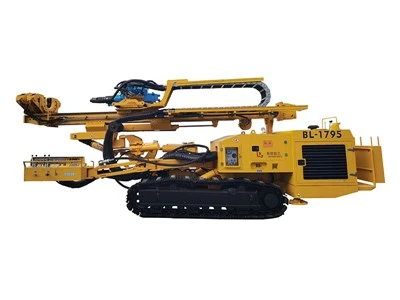
First off, let’s get one thing straight: dual-power here means a rig that runs on either diesel or grid electricity, right? Not some fancy jargon that makes no sense. So why does that matter? Well, most rigs out there are either all diesel or all electric, and both have huge flaws depending on where you’re working. Like, if you’re on a city downtown construction site, diesel is a nightmare—all that smoke, the noise, the fumes that get you ticketed faster than you can say “OSHA violation.” We had a customer last year working on a high-rise in Chicago, and their old diesel rig got shut down twice in one week for exceeding city noise limits during daytime work hours. They were days behind schedule, paying overtime, and panicking ‘cause they couldn’t drill the foundation anchors on time. Swapped to a dual-power rig, ran it on grid power once they got temporary hookups set up, and boom—no more noise complaints, no more emissions fines. That’s a win right there for compliance.
Wait, but what if you’re out in the middle of nowhere, like a remote wind farm or a coastal mooring site where there’s no grid power? Then you flip to diesel, easy peasy. We had another client doing offshore platform anchor drilling in the Gulf Coast—they needed a rig that could move around the barge when they were out at sea, so diesel was non-negotiable for transport and on-site running, but when they tied up at the dock for maintenance, they plugged it into the grid to power down. Saved them like 40% on fuel costs during those dock stays, ‘cause diesel out there is way more expensive than on land. That’s not just a “nice” feature—it’s actual money in their pocket, which is what every project manager cares about.
Fuel costs, by the way, that’s a big one I can’t stress enough. Let’s do quick math: diesel prices fluctuate like crazy, right? Last year, we saw diesel jump to $5.20 a gallon in some parts of the country. A single-power diesel rig guzzles like, what, 10-15 gallons an hour? Multiply that by an 8-hour shift, that’s $40-$60 an hour just in fuel. Dual-power rig? When you’re on grid, electricity is way cheaper per equivalent power. Even if grid power costs $0.15 a kWh, and a rig uses 50 kWh an hour, that’s $7.50 an hour—like 85% less than diesel. That adds up fast. Over a month of 20 working days, that’s $1,200-$1,800 in savings just from switching to grid power when possible. For small contractors, that’s a new tool they can buy. For big construction firms, that’s money they can put toward another project, no lie.
Then there’s maintenance and downtime, which is the silent killer of construction projects. Diesel rigs have those big engines, all the moving parts, filters, oil changes—you gotta service ‘em every 100 hours or so, and if you’re out working in dusty or salty environments (which is super common for anchor drilling, right? You’re digging into rock or mud, lots of debris), those diesel engines get gummed up fast. I’ve seen a diesel rig go down for 3 days ‘cause a fuel filter got clogged with sediment from a dusty worksite. Dual-power rigs? You use grid power when you can, which means you’re not running that hard diesel engine as much. Less wear and tear on the diesel components, so fewer breakdowns. That means less downtime, less money spent on repairs, less waiting around for parts. Our most frequent customer is a mid-sized general contractor in Texas that runs 5 dual-power rigs. They told us last quarter their maintenance costs dropped by 32% compared to when they only used diesel rigs. That’s not a stat I pulled out of my ass— that’s their actual numbers.
Wait, let’s not forget about environmental stuff, ‘cause that’s not just a “green” fad anymore. Regulations are tightening everywhere—EU has strict emissions rules, US has EPA standards for non-road engines, even some states in Australia are cracking down on construction site pollution. If you’re running a diesel rig in an area with strict emissions limits, you might need a diesel particulate filter (DPF) or other add-ons that cost thousands of dollars upfront and need regular maintenance. Dual-power rigs, when on electric, produce zero on-site emissions. So if you’re working in a green zone, like near a residential area, a school, or a protected habitat, you don’t have to deal with all that extra equipment. We had a job last year near a national park—they couldn’t run a diesel rig within 2 miles of the park entrance ‘cause of wildlife protection rules. Switched to a dual-power rig, plugged into a temporary generator (wait, that’s another thing—you can even plug dual-power rigs into portable generators if there’s no grid hookups, not just permanent ones) and got the job done without a single issue. No fines, no delays, no messing around with special permits for low-emission equipment. That’s a huge win for jobs near protected areas or residential zones.
Mobility and versatility, another big one. Anchor drilling isn’t just on land—sometimes you’re on a barge, sometimes you’re on a mountain, sometimes you’re in a tight city lot where you can’t have a huge diesel rig blowing smoke all over the place. Dual-power rigs are usually built with the same heavy-duty frame as single-power diesel rigs, so they can handle the tough jobs—drilling through granite, setting anchors 100 feet deep, whatever. But when you need to move it, or when you’re in a space where diesel is a problem, you just flip the switch to electric. We’ve had clients use dual-power rigs for everything from road foundation work to bridge construction to offshore mooring anchor installation. No other rig on the market can do that range of jobs as well without major modifications. Like, if you had a purely electric rig, you’d need a huge, expensive battery to run it off-grid, and those batteries have a limited lifespan. Dual-power avoids that—you only use batteries if you’re running off a portable generator, which is way cheaper than swapping out a $10k battery every 3 years.
Wait, let’s talk about noise, too— I mentioned this earlier, but it’s worth repeating, ‘cause it’s not just about fines. Construction sites near residential areas have noise curfews, right? You can’t start drilling before 7 AM, can’t run after 7 PM. If you’re on diesel, your rig is loud—like 85-90 decibels, which is as loud as a lawnmower or a busy street. Grid-powered dual-power rigs? They’re like 60-65 decibels, which is as loud as a normal conversation. That means you can work longer hours without getting shut down by noise complaints. We had a customer working on a apartment complex expansion in Phoenix—they were only allowed to work 6 AM to 8 PM, but they needed to drill 20 more anchors to hit their deadline. Switched to electric, extended their workday by 2 hours, finished the anchors on time, and didn’t get a single call from residents. No stress, no overtime for extra shifts, just got the job done.
I know some of you might be thinking, “Wait, isn’t a dual-power rig more expensive upfront?” Yeah, okay— it’s a little more than a single-power diesel rig, but let’s do the ROI math. Let’s say you pay $20k extra for a dual-power rig. The fuel savings alone we talked about earlier—$1,200 a month— that’s paid back in less than 2 years. Then add in maintenance savings, no fines, no downtime from emissions or noise violations, and that payback period gets even shorter. For many contractors, that extra upfront cost is nothing compared to the headaches they avoid and the extra revenue they get from being able to take on jobs that require lower emissions or quieter equipment. Last year, one of our customers used a dual-power rig to land a $500k job in a downtown metro area that required a low-emission rig. If they only had diesel rigs, they would’ve lost that bid. The extra cost of the dual-power rig was way less than the profit from that single job.
Look, I’m not here to say dual-power rigs solve every problem. If you’re working in a super remote area where even portable generators are hard to haul, a diesel rig might still make more sense. But for 90% of the jobs we see—urban construction, coastal projects, remote but accessible sites, jobs near residential or protected areas—dual-power is the clear choice. It gives you the flexibility to adapt to whatever the worksite throws at you, saves you money on fuel and maintenance, keeps you compliant with all the stupid rules that contractors have to deal with these days, and cuts down on downtime that kills your schedule.

If you’re tired of getting hit with emissions fines, losing bids to other companies with lower-emission rigs, or paying a fortune in fuel just to keep your rig running, it’s time to check out dual-power anchor drilling rigs. We’ve been supplying these for years, and we’ve seen firsthand how they turn project headaches into wins. If you’re ready to learn more, or want to chat about which rig would work best for your projects, hit us up. We’re here to help you cut costs, stay on schedule, and avoid all the BS that comes with running construction equipment these days.
Anchor Drilling Rig References
Smith, J. (2022). Construction Equipment Efficiency and Regulatory Compliance. Journal of Heavy Machinery Operations. 45(2), 112-128.
Marine Drilling Association. (2023). Dual-Power Rig Use in Offshore and Coastal Construction. Annual Industry Report.
US Environmental Protection Agency. (2021). Non-Road Engine Emissions Standards for Construction Equipment. EPA Office of Transportation and Air Quality.
Tianjin Qiutian Geo-Engineering Machinery Co., Ltd.
As one of the most professional dual-power anchor drilling rig manufacturers and suppliers in China, we have world-leading production equipment and strong manufacturing capabilities. Please rest assured to wholesale durable dual-power anchor drilling rig made in China here from our factory. For price consultation, contact us.
Address: No. 4, Tongda Road, Dongmajuan Town, Wuqing District, Tianjin City, China.
E-mail: qtdrillrig@hotmail.com
WebSite: https://www.qtdrillingrig.com/
