As a memory foam manufacturer, I’ve spent the last 12 years on the production floor, watching every roll of foam come in and every finished mattress topper leave the warehouse. One question I get asked by potential customers all the time—especially by hotel procurement teams and online retail buyers—is: “What actually goes into making sure memory foam is safe, consistent, and built to last?” It’s not just about mixing chemicals and hitting a curing time. Quality control in our factory is non-negotiable; it’s the difference between a foam that lasts 3 years and one that performs reliably for a decade, between a product that’s safe for a family’s bedroom and one that might trigger allergic reactions or off-gas issues. Today, I want to pull back the curtain on exactly what we do, step by step, because I think buyers deserve to know the work that goes into every layer of memory foam. Memory Foam Manufacturers
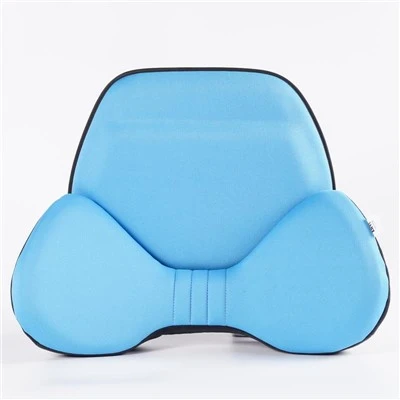
It starts with raw material testing, before we even open a single drum of what we use to make foam. The main ingredients for our memory foam are polyols, isocyanates, and our custom blend of viscoelastic additives that give memory foam its slow-return, pressure-relieving feel. But not all polyols are the same. We source our polyols from three North American suppliers that have been audited annually for GMP (Good Manufacturing Practices) for over a decade, but even then, every batch gets tested on arrival. Last year, we had a polyol batch come in that was 2% below the required hydroxyl number—a metric that measures how well it reacts with isocyanates. If we’d used that batch, we would’ve ended up with foam that was too soft, didn’t support weight evenly, and would’ve lost its shape within a year. We rejected that entire load immediately, no questions asked. We also test every raw material for heavy metals like lead and mercury, even though they’re not supposed to be in foam at all. It’s our safety net. We also run VOC (volatile organic compound) screenings on raw isocyanates because we want to minimize off-gassing from day one, not just after the foam is cured. I don’t care what the industry average is; our customers bring this foam into their homes and hotels, so it needs to be safe to use right away.
Once raw materials pass inspection, the next step is the formulation lab test. Before we run any full production batch, our R&D team makes a 20-pound test batch in our lab. This isn’t just a small “test run”—it’s a full analysis of everything from density to indentation load deflection (ILD), which is the measure of firmness. Density is non-negotiable because it directly ties to durability. A memory foam used for mattresses should have a density of at least 4 pounds per cubic foot, and for upholstery or toppers, it’s usually 3.5 to 5 pounds. Anything lower, and you’re selling foam that will compress out. Last quarter, a new sales rep pushed for a 3.2 density foam for a discount retailer, citing lower costs. We ran the lab batch, and the ILD at 50% compression was 12 pounds, compared to our standard 18 pounds for our medium firmness foam. We refused to approve it. That foam would’ve bottomed out in 18 months, and we don’t want to be part of a product that lets a customer down. We also test for resiliency—memory foam isn’t meant to bounce back like a spring, but a properly formulated foam will return to 95% of its original shape within 2 hours of being compressed, and our lab tests that every time. We also check for air flow. A common complaint about cheap memory foam is that it’s hot. Our formulation team adds small amounts of open-cell additives, and we test breathability in the lab, making sure our foam has an air permeability rating of at least 10 CFM (cubic feet per minute) for our medium density foam. That’s not the industry minimum—that’s our minimum.
After the lab tests pass, we move to the pre-production line trial, which is where we catch issues that small lab batches miss. A lab uses specialized equipment that mixes chemicals in exact, consistent ratios, but a full production line runs at 400 pounds per minute. Variables like line speed, mixing pressure, and ambient temperature (we keep our production area at 72 degrees Fahrenheit year-round for this exact reason) can throw off the foam’s quality. We run a 500-pound trial batch, pull samples every 10 feet along the conveyor, and test each sample for density, firmness, and cell structure. If the cells are too large, the foam is soft and breakable; if they’re too small, it’s denser than intended and traps heat. We also run a tensile strength test—pulling a sample until it breaks to make sure it doesn’t tear under normal use. We once ran a trial batch where the mixing pump was calibrated incorrectly, leading to inconsistent mixing ratios across the batch. The foam samples from the start of the line were 19 ILD, and the ones from the end were 16 ILD. We shut the line down, recalibrated, and ran the trial again before starting full production. That’s the kind of attention to detail most big manufacturers skip, and it’s why our repeat customers come back year after year.
Once production is running, we have in-line quality checks every single hour. We have three quality control (QC) technicians on every shift, walking the line, pulling samples at random, and checking the foam’s core. The most important in-line check is the core sample. When foam is cured, we cut a 1-inch thick cross-section from the middle of the foam block, not just the edge. Edges cure faster, so they’re not a true representation of the foam. We test that core sample for density: a 4-pound per cubic foot medium density foam should weigh exactly 0.333 pounds per cubic inch, so a 1-inch, 12×12-inch sample should weigh 0.333 pounds. That’s a simple math check, but it catches mistakes that mixing ratios can cause. We also check for skin damage, tears, and uneven curing. Curing time is another big one—our foam cures for 4 minutes per inch of thickness, so a 6-inch thick topper cures for 24 minutes, and we use temperature sensors on every block to make sure the internal temperature doesn’t drop too low during curing. If it does, the foam is under-cured, has a bad smell, and won’t hold its shape. We reject entire blocks if they don’t meet that threshold. We also do a visual check for “scorch marks” from over-curing, which weaken the foam and cause it to crumble over time.
After the foam is cut to size for customer orders, we do final finished goods testing before it leaves the warehouse. This is where we test for two critical things: off-gassing and durability, specifically for our bulk orders. For off-gassing, we run the California TB 117-2013 test, which is the gold standard for low VOCs in furniture, and we also test for CertiPUR-US certification, which is a voluntary, third-party testing program that ensures foam is free of harmful chemicals like phthalates, formaldehyde, and heavy metals. We don’t just send a random sample to the lab—we send three samples from every order, and we don’t ship the order until the test results come back. Last year, a small order for a boutique hotel came back with a slight formaldehyde level, just barely above the CertiPUR-US threshold. We rejected the entire order, even though the hotel was waiting on the delivery. We’d rather lose a small order than damage our reputation for safety. For durability testing, we use our in-house durability tester, which compresses a 2×2 foot sample of foam 50,000 times at 50% compression. That’s roughly 10 years of regular use for a mattress topper. After the test, we measure the ILD again. Our foam should lose no more than 10% of its firmness after 50,000 compressions. We once had a batch where the loss was 14%, which meant it would wear out in 5 years instead of 10. We pulled the entire batch and reprocessed it, and we also traced the issue back to a batch of isocyanate that had a slightly different molecular structure than our supplier’s standard. That’s why we track every raw material lot number to every finished order—if there’s an issue, we can trace it back immediately, and it doesn’t affect other orders.
We also have a post-delivery quality check process, even after we ship the order. For our regular customers, especially our hotel clients, we follow up 90 days after delivery to get feedback on product performance. If a customer reports that foam is too soft or starts to compress early, we send our QC team to test a sample of the returned foam, check its density, and run a resiliency test. Last year, a hotel in Florida reported that their 6-inch mattress toppers were getting hot and losing shape after 6 months of use. We found that the foam they’d received was from a trial batch where we’d added a small amount of moisture to the polyols to adjust reaction rates, and that batch wasn’t fully cured because of the high humidity in Florida’s shipping conditions. We worked with them to replace the toppers, adjusted our curing time for orders going to high-humidity regions, and updated our shipping guidelines to include climate control for orders going to hot, damp areas. That’s the kind of support you don’t get from a mass-produced manufacturer that doesn’t care about its customers’ use cases.
Another big part of our quality control is our third-party audits. We get audited every year by CertiPUR-US, B Corp (wait, no, not B Corp—our third-party audit is by the independent testing firm Bureau Veritas) to make sure our processes meet global safety and quality standards. We don’t hide anything from these audits. We let them look at our raw material records, our in-line check logs, our lab test data, everything. Last audit, they pointed out that our ambient temperature monitoring system could be more precise, so we upgraded our production area to have 12 temperature sensors instead of the previous 4. That’s how we improve. We also keep detailed records of every QC check for 7 years, so if a customer has a question about an order from 2017, we can pull up the exact raw material lots, in-line test data, and finished goods test results for that order. Transparency is part of quality control too.

At the end of the day, quality control isn’t just a set of checkboxes for us—it’s how we stand behind our product. We don’t just sell memory foam; we sell a product that people sleep on every night, that hotels rely on to keep their guests comfortable, that furniture makers trust for durability. If you’re looking for a memory foam partner that prioritizes consistency, safety, and long-term performance, we can walk you through every step of our process, provide you with test reports for any order, and tailor our foam to your specific needs. Whether you’re a small boutique retailer needing custom-sized toppers, a hotel chain looking for bulk mattress foam, or a furniture maker needing upholstery foam, we can work with you to create a solution that meets your standards. Reach out to our sales team to discuss your requirements, and we’ll send over detailed quality data and a sample of our foam for your testing. We’re confident that once you feel and test our foam, you’ll see the difference in our quality control process.
Memory Foam Mattresses References
- American Society for Testing and Materials (ASTM) International. (2022). Standard Test Methods for Indentation Load Deflection of Flexible Polymeric Foams (D3574).
- California Bureau of Home Furnishings and Thermal Insulation. (2021). Technical Bulletin 117: Requirements, Test Procedures, and Apparatus for the Flammability of Mattresses and Mattress Pads.
- CertiPUR-US Program. (2023). Standards for Flexible Polyurethane Foams Used in Bedding and Upholstered Furniture.
- Bureau Veritas. (2022). Global Quality Audit Guidelines for Polyurethane Foam Manufacturers.
- International Organization for Standardization (ISO). (2021). Flexible cellular polymeric materials – Determination of air permeability (ISO 7227:2021).
Linyi Lujie International Trade Co., Ltd.
As one of the most professional memory foam manufacturers and suppliers in China, we’re featured by quality products and good price. Please rest assured to wholesale bulk durable memory foam in stock here from our factory.
Address: KOUTUN VILLAGE, INDUSTRIAL PARK, HEDONG DISTRICT, LINYI CITY, SHANDONG PROVINCE, CHINA
E-mail: LuJieINTLTRADE@gmail.com
WebSite: https://www.ljmemoryfoam.com/
