If you’ve ever held a precisely machined car engine part, a sleek kitchen appliance handle, or the thin outer shell of a power tool, chances are it’s a die casting. As someone who’s spent the last 12 years running a small die casting supply company—working side-by-side with machinists, quality control teams, and clients who bring their most ambitious part designs to our workshop—I’ve learned that the surface finish of a die casting isn’t just a cosmetic detail. It’s the difference between a part that functions flawlessly for 10 years and one that cracks, corroded, or performs poorly under pressure. Today, I want to break down what die casting surface finish actually means, how we refine it at our facility, and why it matters more than many first-time clients realize. Die Castings
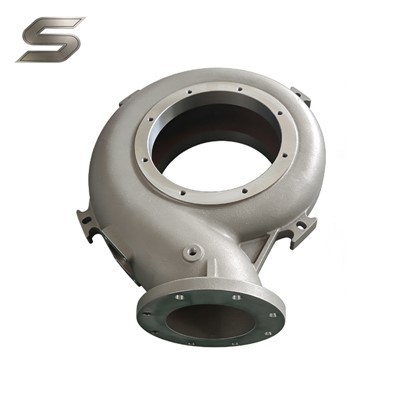
First, let’s start with the basics: what is die casting, anyway? Unlike sand casting, which uses rough sand molds to shape metal, die casting forces molten metal—usually aluminum, zinc, or magnesium—under high pressure into custom-made steel dies (think of them as reusable, precision-machined molds). The metal cools quickly inside the die, forming a part that’s far more dimensionally accurate and durable than sand-cast equivalents. But that rapid cooling and high pressure leave a mark on the surface, which is where surface finish comes in.
At its core, die casting surface finish is a measure of how smooth, consistent, and free of defects a part’s outer layer is. It’s quantified using a number called Ra, or average roughness, which measures the average distance between the highest peaks and lowest valleys on a surface, in microinches or micrometers. A lower Ra number means a smoother surface: for example, a raw, as-cast die casting might have an Ra of 125 to 250 microinches (3.2 to 6.3 micrometers)—rough enough that if you ran your fingernail over it, you’d feel a subtle, almost gritty texture. Compare that to a highly polished automotive trim part, which might have an Ra of 8 to 16 microinches (0.2 to 0.4 micrometers)—smooth enough to catch light evenly, no visible bumps or unevenness to the naked eye.
But Ra isn’t the only piece of the puzzle. Surface finish also includes defects that are unique to die casting, things like die wear marks (lines left from repeated use of the steel dies), porosity (tiny air bubbles trapped in the metal during cooling), cold shuts (where two streams of molten metal fail to fully fuse), or flash (thin, excess metal that leaks out between the die halves). These issues don’t just ruin the look of a part—they can compromise its strength, make it harder to paint or coat, or even cause it to fail during operation. A client once brought in a batch of die-cast bracket parts that had tiny porosity bubbles on their mounting flanges; when we tested them, those bubbles made the brackets 30% weaker than the required spec, leading to a recall from their end customer. That’s why surface finish quality is non-negotiable for most industrial and commercial applications.
Now, here’s where our expertise as a die casting supplier comes in. We don’t just send parts straight from the die press to our clients—we offer a range of surface finishing processes tailored to each part’s intended use, because a surface finish that works for a toy car wheel is not the same as one for a medical device component. Let’s walk through the most common options, and when we recommend each one.
First, raw as-cast finish. This is the surface that comes straight out of the die, no additional processing. It’s the most cost-effective option, perfect for parts where function is more important than appearance, or where the part will be covered (think of internal engine brackets or structural supports that are hidden under a car’s hood). For as-cast parts, we focus on controlling die quality and casting parameters to minimize defects: we machine our dies to ultra-tight tolerances, monitor metal temperature and pressure during each pour, and use automated inspection tools to catch porosity or flash before parts leave the line. While as-cast parts have a rougher surface, we can hold Ra values as low as 63 microinches (1.6 micrometers) for high-quality dies, which is enough for many structural applications.
Next, our most popular finishing process: machining or milling. After casting, we run parts through CNC machining to smooth high spots, remove flash, and refine critical surfaces like mounting holes or mating edges. For example, when we produce die-cast aluminum housings for power tools, we machine the inner and outer edges to ensure they fit snugly with other components, and bring those surfaces down to an Ra of 16 to 32 microinches (0.4 to 0.8 micrometers). Machining also lets us add custom features, like small grooves or threads, that would be hard to do in the die itself. The key here is balancing speed and precision: we use high-speed tooling that cuts cleanly without leaving deep tool marks, and we test each batch to make sure we don’t remove too much material—something that would weaken the part or throw off its dimensional accuracy.
For parts that need a smooth, consistent look for consumer products, we offer bead blasting. This process involves firing tiny, spherical media (glass beads, steel shot, or even plastic beads) at the part at high pressure, which abrades the surface evenly to smooth out tiny imperfections and give it a uniform, matte texture. It’s a go-to for things like appliance handles, outdoor lighting fixtures, and automotive trim, because it hides minor casting defects and creates a surface that’s ready for powder coating or painting. We can adjust the size of the beads to get different finishes: smaller beads give a finer, silkier matte, while larger beads create a more textured, industrial look. Last year, we worked with a kitchen appliance brand that needed their die-cast zinc handles to have a uniform silver matte finish, and we tested three different bead sizes before landing on the right one—they ended up using that finish for three different product lines.
If a client wants an even smoother, more reflective surface, we use polishing. Polishing is a multi-step process that starts with coarser abrasives and moves to finer ones, buffing the surface until it’s highly reflective. This is common for high-end automotive trim, motorcycle parts, and decorative hardware. We also offer electropolishing for parts made of stainless steel, which uses an electrical current to smooth the surface at the molecular level, removing tiny peaks and leaving a surface that’s not just smooth but also highly corrosion-resistant. A client who makes luxury motorcycle frames came to us after their previous supplier’s polished parts were rusting within six months; we switched to electropolishing, and their parts now last the full 5-year warranty period with no corrosion.
For parts that need to resist harsh environments—like marine hardware or outdoor equipment—we often recommend anodizing or powder coating. Anodizing is an electrochemical process that creates a hard, protective oxide layer on aluminum parts, which can be dyed to any color. It not only improves corrosion resistance but also smooths the surface slightly, giving it a durable, scratch-resistant finish. Powder coating adds a thick, protective polymer layer that’s available in every color and texture, from glossy to textured matte. We work with trusted local coating partners to ensure the finish is applied evenly, with no drips or uneven coverage, and we test every batch for adhesion and durability before shipping.
One thing I’ve learned over the years is that surface finish isn’t a one-size-fits-all solution. That’s why we take the time to talk to each client early in the process, before we even fire up the die press, to understand what the part will be used for, what performance requirements it has, and what their budget is. A few years ago, a startup that makes portable camping coolers came to us with a design for a die-cast aluminum hinge. They initially asked for a high-gloss polished finish, but after talking through their needs— the hinge needed to be lightweight, resist water and dirt, and cost as little as possible for mass production—we recommended bead blasting followed by a clear powder coat. It cut their production cost by 25%, and the hinge performed flawlessly through 1,000 opening and closing tests, with no signs of wear or corrosion. That’s the kind of problem-solving we pride ourselves on as a supplier, not just selling parts but helping clients make the best possible product for their customers.
I also want to be transparent about the challenges we face when it comes to surface finish. Die casting is a precision process, but even with the best dies and most careful operators, minor variations in metal temperature, pressure, or cooling can lead to surface defects. That’s why we have a team of quality control inspectors who check every part against ISO 9001 standards, using surface roughness testers, microscopes, and dimensional calipers to catch any parts that don’t meet our specs. We also work with clients to adjust their part designs if surface finish issues come up—for example, adding draft angles to the die (slight tapers) so parts can be removed easily without leaving marks, or adjusting the placement of holes or cutouts that can create weak points or rough surfaces.
Another common question we get from new clients: how does die casting surface finish compare to other processes like injection molding? It’s a fair question. Injection molded parts (usually plastic) can get very smooth surfaces, but they’re not as strong as metal die castings, and they’re more prone to scratching. Die castings, when finished properly, have higher structural integrity and can be finished to a very smooth texture, making them ideal for parts that need both strength and appearance. For example, a die-cast aluminum laptop hinge is far more durable than a plastic one, and when polished correctly, it looks just as sleek.
At the end of the day, the surface finish of a die casting is more than just a visual detail. It’s a reflection of quality, performance, and attention to detail—things that matter whether you’re building a medical device that needs to be sterile, a car part that needs to survive 100,000 miles, or a kitchen tool that gets used every day. For us, as a die casting supplier, it’s our job to make sure every part we send out meets those needs, from the initial design stage all the way through the final finishing process.

If you’re working on a project that needs high-quality die castings—whether it’s a small custom part or a large volume production run—we’d love to help you figure out the right surface finish for your needs. We’ve worked with clients across industries, from automotive and aerospace to consumer goods and medical devices, and we’re always happy to walk through your design, answer questions about processes, and give you a transparent quote. Let’s connect to discuss how we can bring your part to life with the quality and precision you need.
Iron Green Sand Castings References:
- Die Casting Surface Finish and Quality: A Guide for Manufacturers. North American Die Casting Association.
- Surface Roughness Measurement: Fundamentals and Applications. ISO 4287:2018, Geometrical Product Specifications (GPS) – Surface texture: Profile method – Terms, definitions and surface texture parameters.
- Finishing Processes for Die Castings. Zinc Die Casting Association Technical Manual, 2022 Edition.
- Electropolishing of Aluminum Alloys for Corrosion Resistance. Journal of Materials Processing Technology, Volume 287, 2021.
Hebei Shata Machinery Co., Ltd.
As one of the most experienced die casting manufacturers and suppliers in China, we have advanced foundry technique and professional production team. Welcome to buy high-grade die casting for sale here from our factory. All custom made products are with high quality and competitive price.
Address: No.11 Cangshun Rd., Shijiazhuang, Hebei, China
E-mail: Info@shatamachinery.com
WebSite: https://www.shatamachinery.com/
