As a provider of water-cooled condensers, I’ve witnessed firsthand the ever-increasing demand for higher efficiency and performance in this domain. One of the key aspects that can significantly boost a water-cooled condenser’s efficiency is heat transfer enhancement. In this blog, I will explore the various techniques available for enhancing heat transfer in water-cooled condensers. Water Cooled Condenser
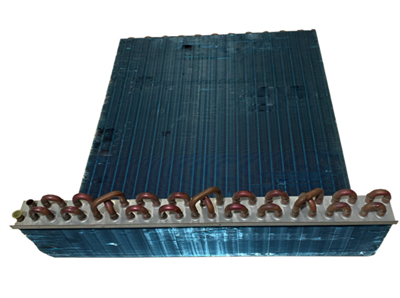
The Basics of Heat Transfer in Water-Cooled Condensers
Before diving into the enhancement techniques, it’s essential to understand the basic principles of heat transfer in water-cooled condensers. A water-cooled condenser is a device that transfers heat from a refrigerant gas to a cooling water stream, causing the refrigerant to condense back into a liquid. The heat transfer process involves three main mechanisms: conduction, convection, and radiation. However, in water-cooled condensers, conduction and convection play the most significant roles.
Conduction is the transfer of heat through a solid material, such as the walls of the condenser tubes. Convection, on the other hand, is the transfer of heat between a fluid (the refrigerant or the cooling water) and a solid surface. The efficiency of these heat transfer mechanisms depends on several factors, including the thermal conductivity of the materials, the surface area available for heat transfer, the temperature difference between the refrigerant and the cooling water, and the flow rates of the fluids.
Heat Transfer Enhancement Techniques
1. Extended Surface Area
One of the most straightforward ways to enhance heat transfer is to increase the surface area available for heat exchange. This can be achieved by using finned tubes in the condenser. Fins are thin, plate-like structures that are attached to the outer surface of the tubes. They increase the surface area of the tubes, allowing for more contact between the refrigerant and the cooling water.
There are different types of fins available, such as plain fins, serrated fins, and louvered fins. Each type has its own advantages and disadvantages in terms of heat transfer performance, pressure drop, and manufacturing cost. For example, serrated fins can disrupt the boundary layer of the fluid flow, which enhances convection heat transfer but may also increase the pressure drop.
In addition to external fins, internal fins can also be used to increase the heat transfer area inside the tubes. These internal fins create a more turbulent flow inside the tubes, which improves the convective heat transfer coefficient.
2. Turbulence Promoters
Turbulence plays a crucial role in enhancing heat transfer in water-cooled condensers. Turbulent flow disrupts the boundary layer of the fluid, bringing warmer fluid closer to the cold surface and vice versa. This increases the rate of heat transfer between the fluid and the surface.
There are several ways to promote turbulence in a water-cooled condenser. One common method is to use inserts inside the tubes. These inserts can be in the form of twisted tapes, wire coils, or other complex geometries. Twisted tapes, for example, create a swirling flow inside the tube, which increases the turbulence and enhances the heat transfer coefficient.
Another way to promote turbulence is to design the condenser with a proper flow arrangement. For example, using a multi-pass flow arrangement can increase the fluid velocity and turbulence in the tubes. This can be achieved by dividing the condenser into multiple sections with baffles or by using a U-tube design.
3. Surface Modification
Modifying the surface of the condenser tubes can also improve heat transfer. This can be done through various surface treatments, such as roughening, coating, or microstructuring.
Roughening the tube surface increases the surface area and disrupts the laminar boundary layer, which enhances convection heat transfer. Techniques such as sandblasting, chemical etching, or machining can be used to create a rough surface on the tubes.
Coating the tube surface with a material that has high thermal conductivity can also improve heat transfer. For example, applying a thin layer of copper or aluminum on the tube surface can enhance the conduction of heat from the refrigerant to the tube wall.
Microstructuring the tube surface is a more advanced technique that involves creating tiny structures, such as microchannels or micropillars, on the surface of the tubes. These microstructures can increase the surface area and promote nucleate boiling, which is a highly efficient mode of heat transfer.
4. Mass Transfer Enhancement
In some cases, mass transfer can also play a role in heat transfer in water-cooled condensers. For example, in condensers that handle mixtures of vapor and non – condensable gases, the presence of non – condensable gases can significantly reduce the heat transfer efficiency.
To enhance mass transfer in such cases, techniques such as suction or purging of non – condensable gases can be employed. This helps to remove the non – condensable gases from the condenser, which improves the heat transfer rate. Another approach is to use a condenser design that promotes better mixing of the vapor and non – condensable gases, which can enhance the mass transfer and improve the overall heat transfer efficiency.
Selection of Heat Transfer Enhancement Techniques
When selecting heat transfer enhancement techniques for a water-cooled condenser, several factors need to be considered. These include the application requirements, the properties of the refrigerant and the cooling water, the cost of implementation, and the maintenance requirements.
For high – performance applications where energy efficiency is a top priority, more advanced techniques such as microstructuring and mass transfer enhancement may be justified. However, for applications with lower performance requirements or limited budgets, simpler techniques like extended surface area or turbulence promoters may be more suitable.
It’s also important to consider the trade – offs between heat transfer enhancement and other factors such as pressure drop. Some techniques that enhance heat transfer may also increase the pressure drop across the condenser, which can require more pumping power and increase the operating costs.
Conclusion
Heat transfer enhancement is a critical aspect of improving the performance and efficiency of water-cooled condensers. By using techniques such as extended surface area, turbulence promoters, surface modification, and mass transfer enhancement, we can significantly increase the heat transfer rate and reduce the energy consumption of the condenser.
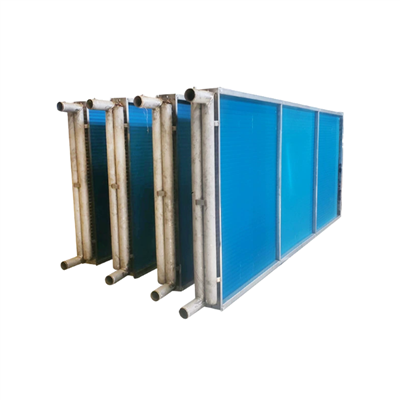
As a water-cooled condenser supplier, I am committed to providing our customers with the most efficient and innovative solutions. We have the expertise and experience to select the right heat transfer enhancement techniques based on your specific requirements. Whether you are in the HVAC industry, power generation, or any other application that requires a water-cooled condenser, we can help you achieve better performance and lower operating costs.
Evaporator If you are interested in learning more about our water-cooled condensers and the heat transfer enhancement techniques we offer, or if you want to discuss a specific project, please feel free to reach out to us. We are always ready to engage in procurement discussions and find the best solution for your needs.
References
- Incropera, F. P., & DeWitt, D. P. (2002). Fundamentals of Heat and Mass Transfer. John Wiley & Sons.
- Kakaç, S., & Liu, H. (2002). Heat Exchangers: Selection, Rating, and Thermal Design. CRC Press.
- Nellis, G. F., & Klein, S. A. (2009). Heat Transfer. Cambridge University Press.
Xiangshui Derkang Refrigeration Equipment Co., Ltd.
Address: No. 2, Xiaojian Town Entrepreneurship Park, Xiangshui County
E-mail: 505745223@qq.com
WebSite: https://www.xsderk.com/
