If you’ve been involved in the desalination space for even a little while, you know it’s one of the most demanding industrial environments out there. The process of turning seawater into potable water exposes every component in the plant to a brutal mix of harsh chemicals, constant high pressure, and extreme temperature swings. That’s why when plant engineers and procurement teams are evaluating new materials for their piping systems, they’re not just looking for something that works today—they’re looking for something that will hold up over decades, without costing a fortune in maintenance or replacements. As a PVDF pipe fittings supplier, I get asked this question all the time: Can PVDF pipe fittings actually work in desalination plants? The short answer is yes, but it’s not a one-size-fits-all kind of decision. There are specific ways PVDF performs in desalination that make it a strong contender, and also a few critical factors that you need to consider before specifying it for your project. I want to break this down in a way that’s rooted in real-world application, not just textbook material properties, because that’s what my team and I deal with every day when we work with desalination plant operators and engineering firms. PVDF Pipe Fittings
First, let’s talk about the specific conditions in desalination plants that make material selection so tough. Desalination facilities primarily use two processes: reverse osmosis (RO) and thermal distillation. Both come with their own set of challenges, but many of the issues overlap. Seawater itself isn’t just salt and water—it has trace minerals like magnesium, calcium, and potassium, but also things like heavy metals, biological contaminants, and organic matter. When you process seawater, you add chemicals too: anti-scalants to prevent mineral buildup on membranes, biocides to kill bacteria and algae, and sometimes acids or bases to adjust pH levels. In thermal distillation, you’re dealing with high temperatures, often above 100°C in some parts of the process. In RO, even though temperatures are lower, you have constant pressure (typically 60 to 80 bar) pushing water through fine membranes. All of these elements can cause corrosion, scaling, degradation, or stress cracking in piping systems. Steel, for example, is prone to rust when exposed to saltwater, and even stainless steel can suffer from pitting corrosion if the water has high chloride levels. PVC, another common plastic pipe material, breaks down quickly in high temperatures and when exposed to strong chemicals, making it unsuitable for most desalination applications.
Now, where does PVDF fit in here? PVDF, or polyvinylidene fluoride, is a fluoropolymer—one of a class of plastics that are known for their resistance to chemicals, thermal stability, and mechanical strength. But let’s get specific about its performance in desalination conditions. One of the biggest advantages PVDF offers is its resistance to corrosion from saltwater and the chemicals used in desalination. I’ve seen firsthand how other plastics start to leach additives when exposed to high concentrations of anti-scalants or biocides, which can contaminate the product water and violate regulatory standards. PVDF, though, has a very low chemical reactivity. It doesn’t react with most of the common chemicals used in RO and thermal distillation processes, including hydrochloric acid, sulfuric acid, sodium hydroxide, and common anti-scaling agents. This means it won’t degrade, leach, or break down over time, even with repeated exposure. That’s a big deal because product water quality is non-negotiable in desalination plants. A leak or a pipe failure that contaminates the water could shut down an entire plant, costing millions of dollars in lost production and cleanup.
Thermal stability is another key factor. In parts of thermal desalination plants, piping can see temperatures up to 150°C (and even higher in some pre-treatment stages). PVDF has a high melting point—around 177°C—so it can handle those elevated temperatures without warping, softening, or losing structural integrity. I remember working with a client in the Middle East who was having trouble with their old steel piping in the thermal brine concentrate lines. The high heat was causing the steel to corrode so quickly that they had to replace parts of the line every two years. When we suggested switching to PVDF fittings and pipe, they were skeptical at first because it’s a plastic, but five years later, they haven’t had to touch those lines. That’s the kind of long-term performance that matters for desalination plants, which are built to last 30 years or more.
Mechanical strength is also important, especially for RO systems that operate under high pressure. PVDF has good tensile strength and impact resistance, so it can handle the constant pressure cycling that’s common in RO plants—where the system starts and stops regularly, putting stress on the piping and fittings. It also has excellent resistance to creep, which means it won’t slowly deform over time under continuous pressure. That’s a big concern with some other plastics, which can start to sag or leak after years of being under constant pressure. I’ve had a few clients ask me if PVDF can handle the high flow rates in RO feed lines, and the answer is yes—PVDF has a smooth interior surface, so it creates less friction than metal pipes, which reduces energy costs for pumping. That’s an added bonus for desalination plants, which are already energy-intensive.
But here’s the thing: PVDF isn’t the right choice for every part of a desalination plant. You can’t just specify PVDF fittings for every line and expect it to work perfectly. There are limitations you have to be aware of. First, while PVDF is resistant to most chemicals, it is susceptible to some strong solvents, like ketones and esters. If your plant is using any of those chemicals in large quantities, you’ll need to check compatibility data to make sure PVDF is the right fit. Second, at temperatures above 150°C, PVDF starts to lose some of its mechanical strength, so for parts of a thermal distillation plant that operate above that, you might need to look at other materials like higher-grade fluoropolymers or alloy steel. Third, installation matters a lot. PVDF fittings can be joined using solvent welding, heat fusion, or mechanical connections, but if those joints aren’t done correctly, they can leak. I’ve seen installations where a technician tried to cut corners on solvent welding, and the joint failed within a year. For PVDF to perform properly in desalination, you need to have trained, experienced installers who know how to work with the material.
Another consideration is regulatory compliance. Desalination plants have to meet strict standards for water quality, set by organizations like the World Health Organization (WHO), the Environmental Protection Agency (EPA) in the U.S., and local regulatory bodies. PVDF is approved for use in potable water applications by most of these organizations, which is a big plus. But not all PVDF is the same—there are different grades of PVDF, and some have additives that could leach into water. When you’re sourcing PVDF fittings for a desalination project, you need to make sure you’re using food-grade or potable-grade PVDF that meets the required standards. As a supplier, we test every batch of our PVDF fittings to make sure they comply with these standards, because I know that if a client’s product water fails a test because of our materials, it’s not just their problem—it’s our reputation on the line.
Let’s also talk about real-world case studies to put this in perspective. A large desalination plant in Australia, for example, installed PVDF pipe fittings in their RO pre-treatment lines about 10 years ago. Before that, they were using HDPE (high-density polyethylene) fittings, which started to degrade after about 5 years due to exposure to high concentrations of biocides. They switched to PVDF, and as of their last inspection three years ago, the fittings were still in perfect condition, with no signs of corrosion, leaching, or scaling. Another plant in Saudi Arabia, which uses thermal distillation, replaced their carbon steel fittings in the brine lines with PVDF fittings eight years ago. The original steel lines needed replacement every 3 to 4 years, but the PVDF lines have had zero failures in that time, which has saved them millions of dollars in maintenance and replacement costs. These are not isolated cases—we’ve worked with dozens of desalination plants around the world that have switched to PVDF and seen long-term benefits.
Of course, cost is always a factor in any industrial project. PVDF fittings are more expensive upfront than some other materials like PVC or HDPE. But when you factor in the long-term savings on maintenance, replacement, and energy, PVDF often ends up being more cost-effective over the life of the plant. Let’s do a quick rough calculation: if a steel line costs $50,000 to install and needs replacement every 5 years, that’s $300,000 over 30 years. A PVDF line that costs $80,000 upfront, with no replacement needed, is $80,000 over 30 years. That’s a huge difference. Plus, the downtime required to replace piping in a desalination plant is extremely expensive—some plants can lose hundreds of thousands of dollars per hour of downtime. Avoiding that downtime is another big cost benefit of using a durable material like PVDF.
So, when should you specify PVDF pipe fittings in a desalination plant? It’s a good choice for RO pre-treatment lines, RO product water lines, chemical injection lines (for anti-scalants, biocides, acids, and bases), and many of the piping lines in thermal distillation plants that operate at temperatures below 150°C. It’s less ideal for lines that carry very high concentrations of strong solvents, or lines that operate above 150°C. It’s also important to work with a supplier that understands desalination applications, not just a general plastics supplier. As a PVDF pipe fittings supplier, we don’t just sell products—we work with our clients to assess their specific application, help them choose the right grade of PVDF, and provide guidance on installation best practices. We also offer testing and certification to make sure our fittings meet all regulatory and project requirements.
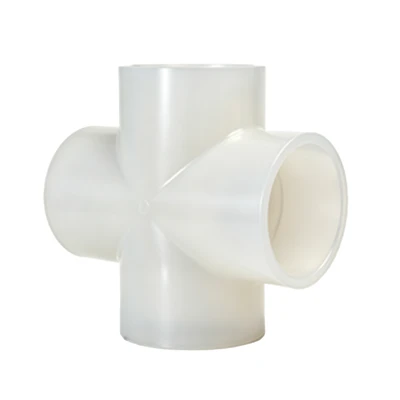
If you’re a desalination plant operator, engineer, or procurement manager reading this, I know you have a lot on your plate. You’re responsible for keeping the plant running efficiently, producing high-quality water, and managing costs over the long term. The question of whether PVDF pipe fittings can work in desalination plants has a clear answer, but it’s not just a yes or no—it’s a yes when specified and installed correctly, with the right grade of material, and for the right parts of the process. If you’re evaluating materials for your next project, or you’re dealing with ongoing issues with your current piping systems, I’d be happy to talk through your specific needs with you. We’ve worked with projects of all sizes, from small modular desalination units to large-scale municipal plants, and we can provide samples, testing data, and references from other clients in the desalination space. Don’t just take my word for it—ask someone who’s been using PVDF in their plant for years, or ask us for the information you need to make the right decision for your project.
UPVC Pipes References
- American Water Works Association. (2019). PVC and PVDF Pipe Materials for Water and Wastewater Applications. AWWA Manual M23.
- World Health Organization. (2020). Guidelines for Drinking-water Quality, 4th edition.
- Kuehn, M., & Muller, B. (2018). Fluoropolymers in Desalination Systems: Performance and Durability. Desalination, 435, 115–122.
- Saudi Water Partnership Program. (2021). Material Selection Guidelines for Desalination Plant Piping.
- Australian Water Association. (2019). Advanced Materials for Desalination Infrastructure: Long-Term Performance Case Studies.
Anhui Weidong Pipeline Technology Co., Ltd.
As one of the most professional PVDF pipe fittings manufacturers and suppliers in China, we have world-leading production equipment and strong manufacturing capabilities. Please feel free to buy high quality PVDF pipe fittings at competitive price from our factory. Welcome to contact us for quotation.
Address: No. 35 Hongyuan Avenue, Economic Development Zone, Huoshan County, Lu’an City, Anhui Province
E-mail: 18056040225@163.com
WebSite: https://www.wdpipe.com/
